


LED Panel Light Structure and Components Overview
 Jan 01, 2026|
 View:466
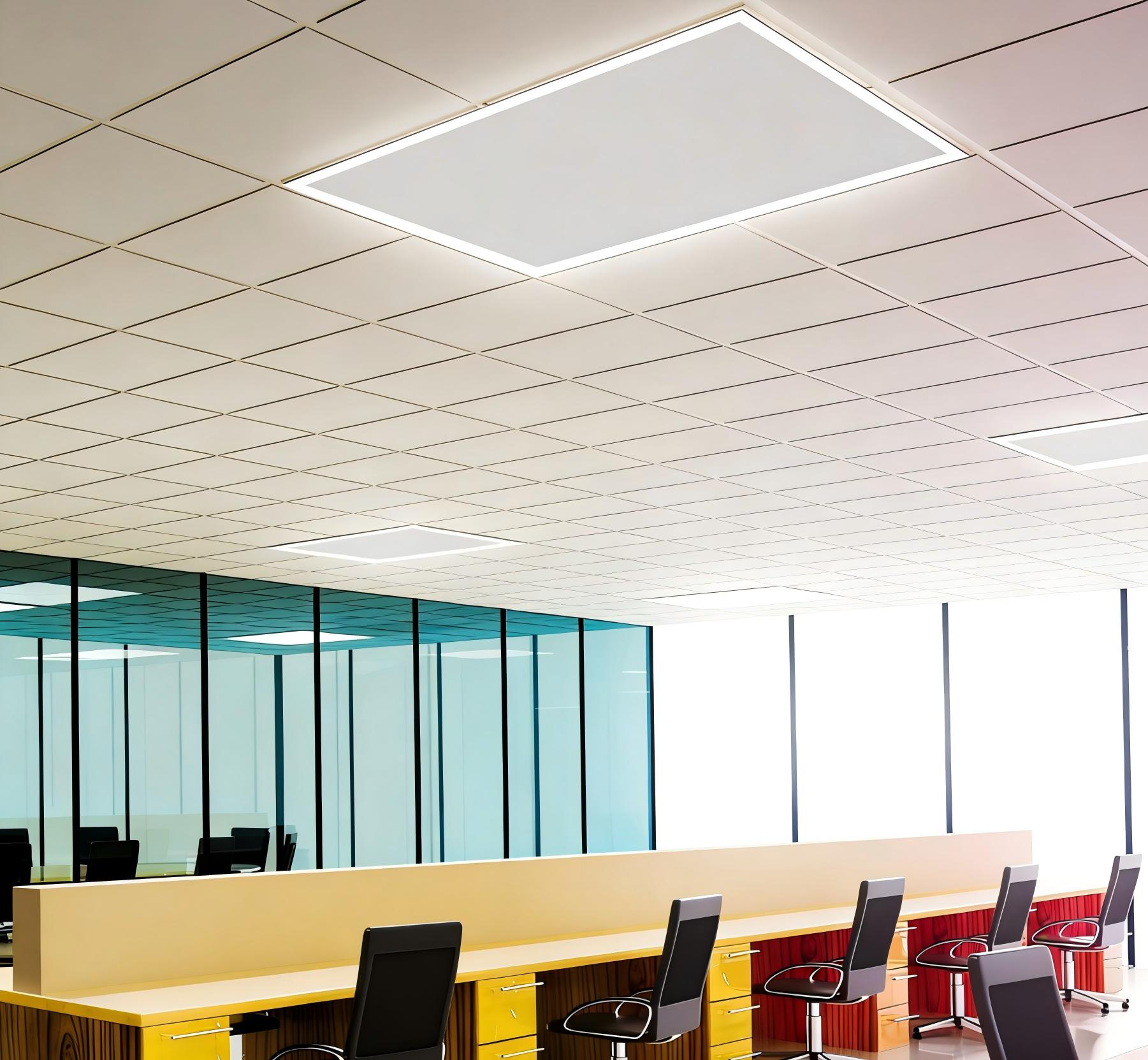
LED panel lights are mainly composed of an aluminum frame, light source, light guide plate, diffuser plate, reflective paper, backplate, and driver power supply. Light emitted from the light source travels along the two or four sides of the light guide plate, illuminating its interior. After interference pattern processing, the direction of light propagation is altered. LED panel lights utilize high-efficiency light guide plates and are widely used in office buildings, supermarkets, hotels, subway stations, exhibition halls, and other locations.
When designing and manufacturing LED panel lights, their sealing performance must be considered. Currently, commonly used LED panel lights employ a sealed structure to prevent light loss. LED panel lights can be divided into two types: front-emitting LED panel lights and side-emitting LED panel lights. The structural difference between front-emitting and side-emitting LED panel lights is the absence of a light guide plate. The light guide plate of side-emitting LED panel lights typically has a light transmittance of around 93%.
Because the spacing between LEDs in a front-emitting LED panel light is relatively large, generally more than 15mm, the distance between the front-emitting LED panel light and the PC diffuser plate is much larger than that of a side-emitting LED panel light. This significant difference ensures that no dark areas are formed when the front-emitting LED panel light is lit.
It is worth noting that the main technical challenges of LED panel lights lie in the light guide plate and light distribution. Using a side-emitting method can result in low luminous efficiency and uneven light distribution.